“Why vampires, werewolves, and the supernatural—especially if you say you’re Christian?” That’s a question I’ve heard silently asked in the eyes of friends, even if it rarely comes out in words. For most people, the pull of the supernatural is tied up with the “dark side”—evil, sinister, dangerous. But for me, it’s always been something more. My fascination with these beings goes back to when I was fourteen, when life itself felt like a place between worlds.
At that age, I had just lost my mom. I saw my abuser again after years of distance, and my family was going through trauma that left me panicked, terrified, and utterly alone. I remember sitting in the room with my grandparents and feeling like I was caught in this strange space between life and death. Come to think of it, I don’t think I really felt “alive” again until I held my newborn nephew four years ago. Back then, I made the idea of vampires fit the mold I needed: beings who walked that same line, caught between life and death, embodying immortality, desire, fear of decay, and rebellion against the natural order.
I built them into the stories I was writing by hand. My imagination turned into escape, into survival. I’d daydream about being rescued—sometimes picturing Jordan Knight on a motorcycle pulling me away from it all. I didn’t feel safe in my family, didn’t feel like I fit anywhere, and escape was my instinct. So, in my stories, Jordan Knight became a character—turned vampire, blood-bonded into that world—woven into the life of Berenice (back then, called Secret). In those early versions, I gave her a twin brother, Scott Dennis, inspired by a relative of my dad’s partner that I had a crush on. Writing became my safe place, a distraction, and more than that, a way to process a world I couldn’t control.
I only knew the basics of vampire and werewolf folklore back then—whatever I picked up from things like Bram Stoker’s Dracula on VHS, which I mostly laughed through. But I knew right away that “my vampires” weren’t like the ones in movies. They weren’t demons. They weren’t the result of bargains with the devil. They didn’t spike crosses in churches. In my stories, vampires and shifters weren’t born of evil—they were something else.
At first, blood was just fuel, a liquid diet. But over time I realized blood could symbolize more: life force, vitality, intimacy, power. Immortality became less of a gift and more of an endurance sport. I started asking myself: how would someone handle living hundreds of years, reinventing themselves over and over, creating new backstories, hobbies, even speech patterns to keep going? At first, maybe immortality would feel like one long party—but eventually, everyone tires of the party. That’s when the real questions come.
For years, I kept religion far away from this world. I didn’t understand Christianity, and I thought it meant bowing down and doing whatever God commanded like some kind of servant. I was wrong. What changed everything was the word relationship. After losing my husband of seventeen years, I knew exactly what I wanted—and didn’t want—in relationships. And in the middle of my grief, I discovered I could find what I longed for in Jesus. For me, He became the big brother I’d always wanted: someone who would protect me when my family couldn’t, who would offer support when I had none.
Now I find myself asking: what would happen if my characters encountered Christianity? How would they react to faith, to the idea of grace, to a God who offers relationship instead of chains? It fascinates me, because these characters began as an escape, but they’ve grown with me. They’ve carried my pain, my longing, my need to belong. They’ve been with me so long that I can’t just let them go, even when I’ve tried. They still show up in my dreams.
Maybe that’s part of why society keeps returning to these myths, too. Every generation reinvents the vampire—Lost Boys, Interview with the Vampire, Bram Stoker’s Dracula, Blood & Donuts, Once Bitten, Buffy the Vampire Slayer, Twilight, The Vampire Diaries, and now Sinners. We keep telling these stories because they keep reflecting us. Myths survive because they adapt to the questions we’re still asking. Vampires and shifters and supernatural beings aren’t just fantasy—they’re mirrors. They help us explore the parts of ourselves we don’t always have the courage to name: our fears, our desires, our contradictions, and our humanity.

Creative Modifications
"Surviving life’s plot twists with yarn, loud worship music, and a stubborn streak of hope."
Hello and howdy from Ontario, Canada — I’m glad you’ve found your way to this creative corner I’m building for my art and storytelling.
I hold diplomas in Visual Creative Arts & Design and Medical Office Administration, blending creativity with strong organizational skills while I continue seeking where God is leading me.
A lifelong maker, I knit, crochet, and explore fibre arts, support a Southern Ontario knitting group through communications, and volunteer creating social media content for Abbey Cats Adoptions.
My work is shaped by faith, resilience, and healing, and I’m currently developing a character-driven fictional world exploring identity, redemption, and hope in unexpected places.
-

-
Sometimes the smallest wins can shift our mindset, motivation, and resilience—and that’s the truth in those words. The proof is in experience. Have you noticed how you feel when you set small goals and actually achieve them? Recognizing those little wins in yourself is half the battle of getting your ducks in a row.
Big goals can be intimidating and overwhelming. We can lose that forward motion, stuck in the weight of the “bigger picture” instead of rolling into action. I often experience this myself and end up flustered and knotted up, unable to think straight—making mistakes with even the simplest of tasks. Society’s obsession with milestones and highlight reels has always felt overblown to me. I’ll admit, I’ve had the thought: “Why would anyone care?” Personally, I’m not going to post on Stories or Instagram that I remembered to take my meds in the morning—but I have shared when my cat demands attention while I’m rushing through my routine to get the day started.
When I take the time to sit with my thoughts (sometimes journaling helps), the noise starts to peel back and I can see what actually needs to be done today, and what can wait until tomorrow. More often than not, the root of my anxiety is simple: my space is a mess, and I’m out of clean bowls. Once I recognize that, I can set small goals—tidy my station, stack things up, and tackle the dishes in my tiny kitchen. I may grumble and sulk through it, but when it’s done, that burden is gone.
Little accomplishments do matter. Those few moments of “I did it”—and maybe even a small happy dance—can feel so rewarding. Accomplishing things is crucial for me, which is probably why it drives me up the wall when I’m at my parents’ house and all we do is watch TV and complain about people who’ve hurt us or turned out to be not-so-great friends.
Success isn’t just the final goal—it’s built brick by brick. That first push to get moving can carry you further than you expected, simply because you made the effort. And honestly? In those moments, I think a happy dance is mandatory. The little steps aren’t just preparation for the “real” thing—they are the journey. When I handle the small tasks, I’m calmer, more prepared, and ready to tackle the bigger goals. It’s part of why I’m not freaking out about finally starting what I’ve been waiting on for months this Tuesday. I’ve been preparing, my friends have supported me in setting goals, and in the meantime, I’ve even managed to make most of a hexagon cardigan.
No win is too small to matter. For some, making the bed sets the tone for a day of order. For others, a simple morning routine keeps the whole day flowing smoothly. Whatever it looks like for you—today, notice one small win, and let it count. -
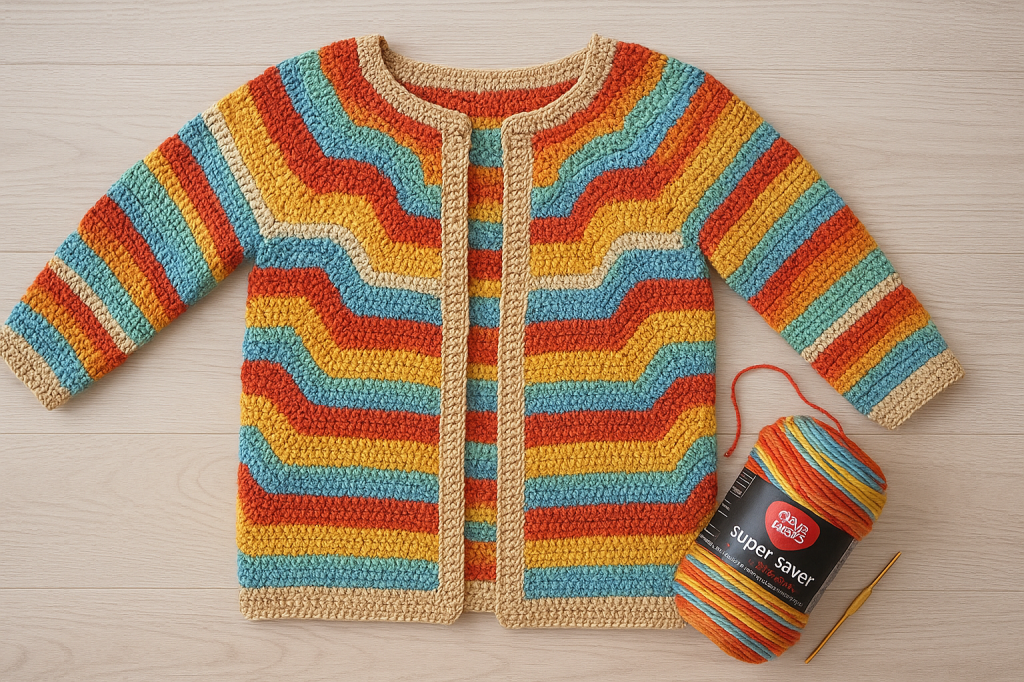
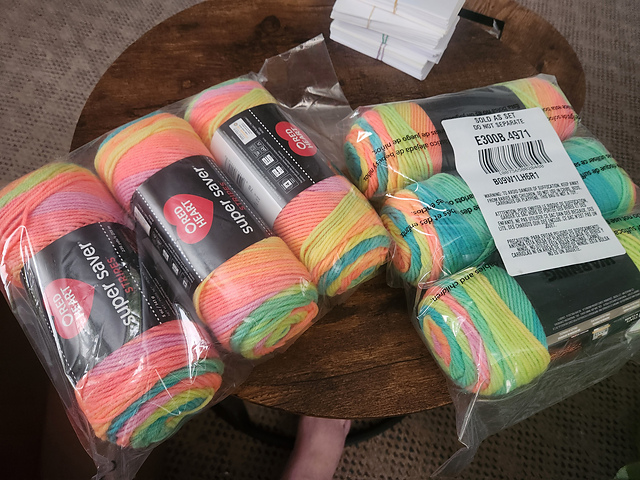
Two orders from Amazon I’ve been meaning to make one for a few years now with Caron Cakes Big Cake Cookie Crumble, but—like my dad—I never quite got around to it. At the last knitting group meet-up at Falls Manor Restaurant here in Niagara Falls, a friend showed up working on her hexagon cardi, seaming the sleeves. It was gorgeous, made in Red Heart Super Saver Bitty Stripes, and she’s about my size. I’ve admired another jacket she made for a while, and with WP cranking them out quickly in worsted weight, I couldn’t help but feel inspired. The final push came when I stumbled across Red Heart Super Saver Retro Stripes—packs of three on Amazon for under twenty bucks. I ordered two right away, and a few days later ordered two more, making sure I had enough. Crochet eats yarn faster than I devour a pizza when I’m hungry.
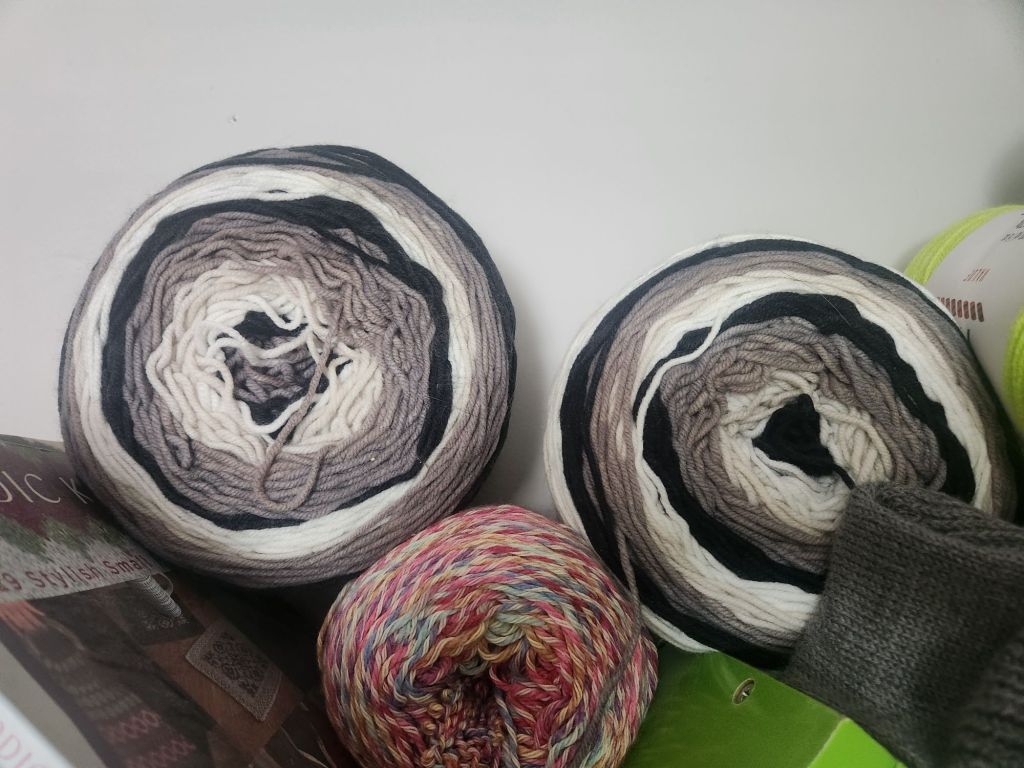
Caron Cakes Big Caked “Cookie Crumble” By the 17th, I had finished one side of the cardigan and seamed it inside out, since that’s second nature from my sewing days. The sleeves turned out a little short, but not by much. On the 20th, I repeated the process with the second side. This week, I learned how to do the cuffs—and yesterday it hit me that I could have skipped a stitch and slip-stitched into the next to bring the sleeves in at the wrists. Of course, I realized it too late, but that’s me. At least I’ll know for next time.
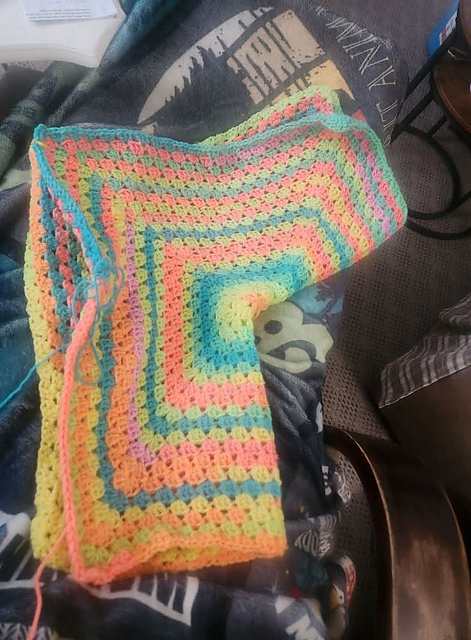
One side was completed minus the two rounds and cuffs for sleaves. Now I’m hoping I’ll have the confidence to actually wear this when everyone else is bundled in “real” jackets. In my head, I always feel like I need to mimic people who look more put together—even when I know they’re just as frantic underneath. Tanya logic at its finest. I run warm anyway, something I’ve always blamed on my weight, thanks to a few comments my late husband once made about my sister being (maybe too) thin and always cold. The irony being he was overweight himself.
At this point, most of the cardi is finished. I just need to make and attach the “long” parts, then put in the hours on the ribbing and button band around the front closure. I’m also planning to add two granny squares below the top pieces—it just feels more logical and practical than doing strips back and forth across the back at (or just below) my butt. To me, that only draws more attention to that area—but what do I know?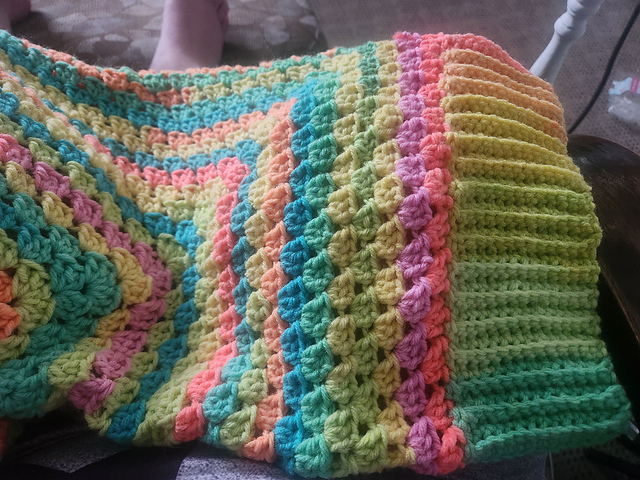
Large cuff completed. So wish me luck. Thankfully, this project is actually going according to plan—unlike the two “skimpy” summer tops that have been sitting half-done on my WIP cart for the past two or three years. If you’re curious, you can follow along on my Ravelry page, where I’ve been documenting the progress. And who knows, maybe that Cookie Crumble yarn will be made into a cardigan yet this year.

Nearly completed cardigan -
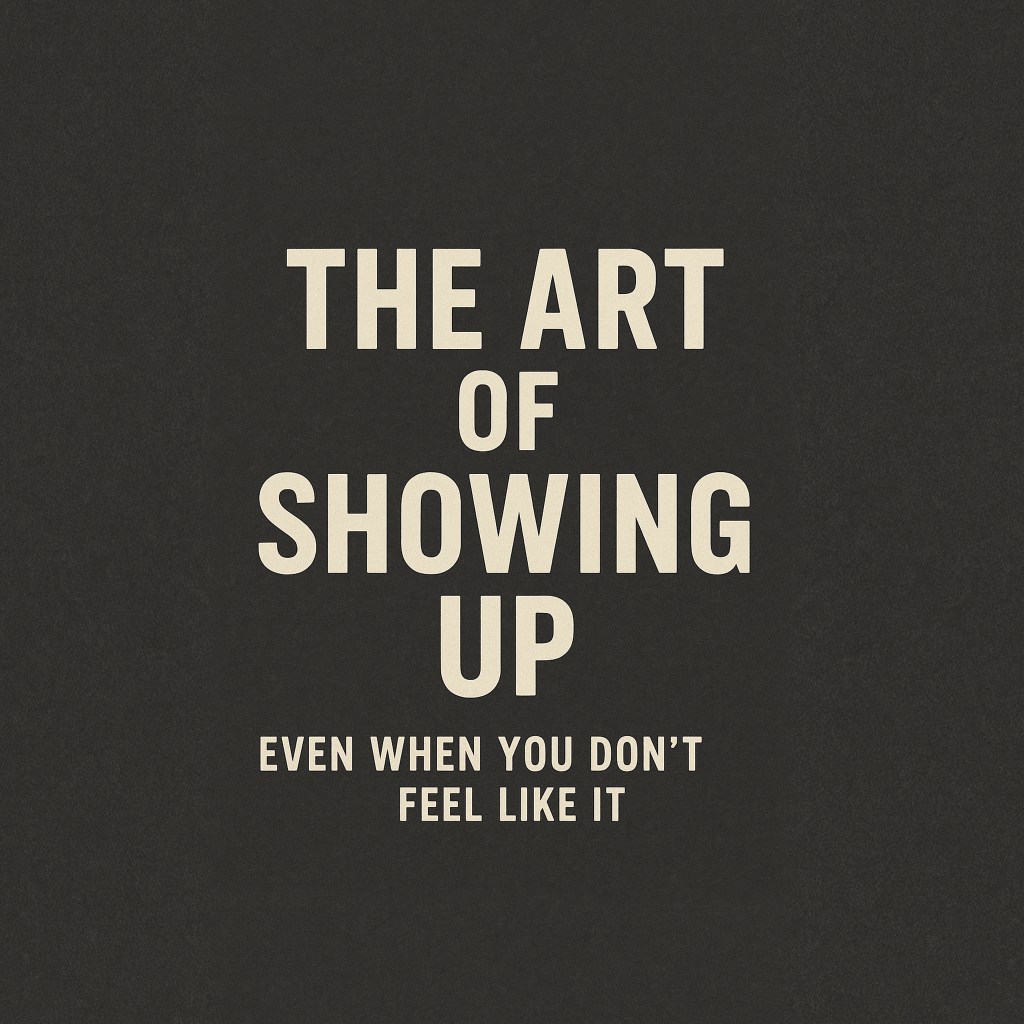
Some days, the hardest part of chasing a dream isn’t the work itself—it’s finding the strength to show up in the first place. Showing up when you don’t feel like it isn’t about discipline or motivation—it’s about proving to yourself that you’re stronger than the excuses.
When Everything in You Says “No”
Take a recent Tuesday, for example. I had to make myself presentable, head to what will soon be my placement, introduce myself, and dig up some information the school hadn’t provided.
I did not want to do this. My head was screaming, my emotions were throwing a tantrum like a toddler, and the “what ifs” were swirling. The negativity was as thick as walking against the tide.
But then something odd—something I’ve come to rely on—kicked in. It’s a kind of autopilot. A pulling-up-the-big-girl-panties moment. I’m sure you’ve had it happen too: you just go, do your part, and let things unfold.
The Power of Just Showing Up
That’s exactly what I did. Truthfully, I owe a lot to my knitting friend who chattered away during the drive, keeping me from spiraling. When I arrived, I spoke with a woman—someone who hadn’t even been given my name but had already told the school she was interested. That conversation cleared a lot up.
Just showing up pushed the ball forward.
And that’s what fascinates me: how often I surprise myself when I simply do the thing I’ve been dreading. Momentum only comes after you take the first step.
The Weight We Carry
But let’s be real—it’s not always easy. My brain loves to get tangled in assumptions: how people will react, what the atmosphere will feel like, what others will say. Those thoughts alone can drive me right around the bend.
And then the insecurities creep in:
• What if the other women don’t like me because I’m new?
• What if they notice I write down too many notes?
• What if they judge my stretched ears, my hair, or—mainly—my size?
That’s when old family comments resurface, the ones about weight and appearance, and how much I wished resources, books, and communities I’ve since found existed when I was younger. Maybe then I wouldn’t have carried so much anger toward food and cooking. Maybe other little girls could’ve avoided that shame.
It’s a heavy history—but it’s mine to keep moving through.
Pushing Forward Anyway
Still, I push through. Especially since my husband hasn’t been around, I’ve found a fierceness I didn’t know I had—the stubborn will to keep chasing things that scare me.
Honestly, the thought of becoming a medical office administrator at this business terrifies me. I don’t feel as confident in everything I’ve learned as I’d like. But just like family gatherings, I’ll bring some knitting, whisper a few prayers, pull up the panties, and plow forward.
Because maybe that’s the whole secret: you don’t have to love every step, you just have to keep taking them.
Finding What to Love
I like where I’m going, even if I don’t love every moment. That bugs me, sure, but I’ve realized no one loves everything they do. What matters is surrounding myself with enough of the things I do love.
So no more worrying about what others say or think. If I enjoy something, I’m going to do it.
I’ll take the job, show up, contribute, and make my mark in this wild, messy life.I’ll pack my bag, give my cat some love, say a quick prayer, and step forward—again and again.