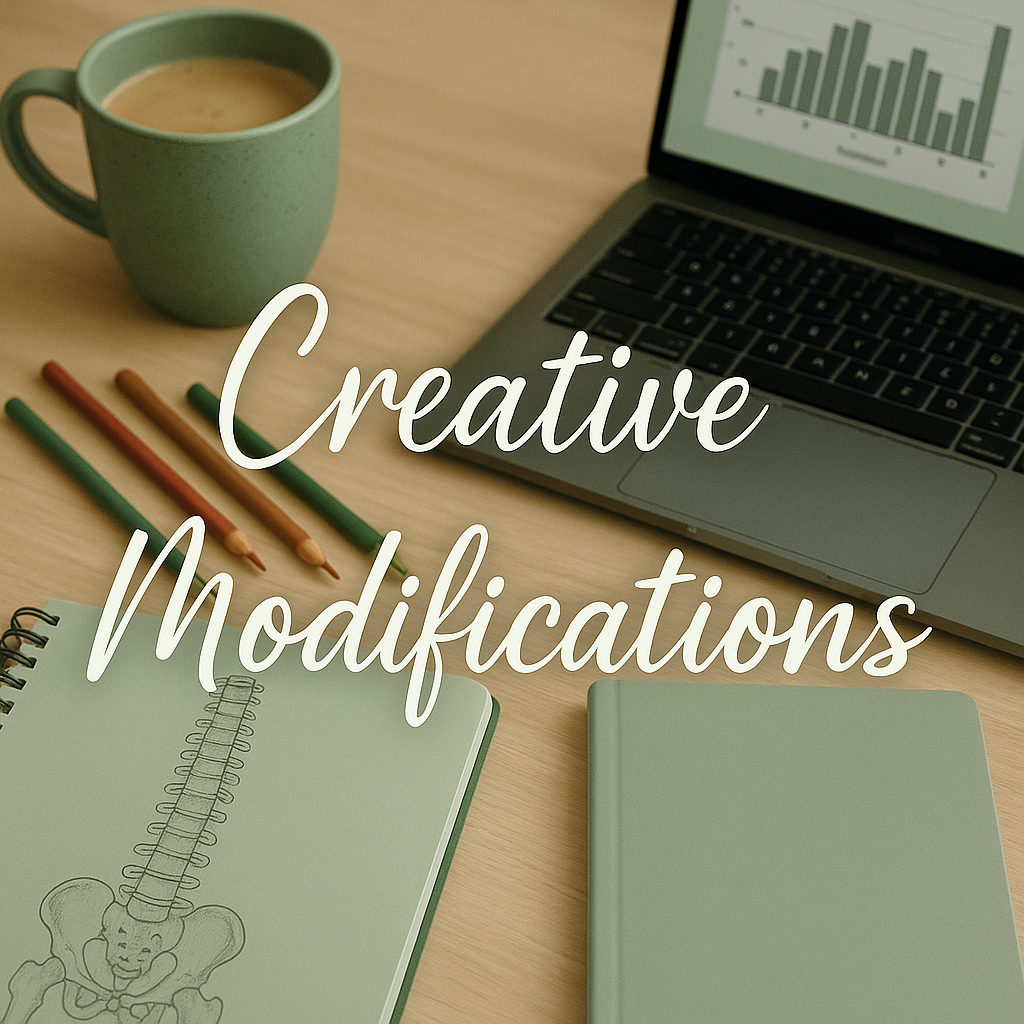
When I started my Medical Office Administration course last September, I was blown away—okay, let’s be honest, alarmed—at everything in front of me. I felt overwhelmed and scared, wondering how I’d make it through the classes, let alone co-op at the end. What I didn’t expect were the life lessons tucked between the textbooks, assignments, and placement.
Patience seems like a lifelong lesson I keep circling back to. I’m the type who likes to get the important tasks done first so I can relax and deal with the “less important” stuff later. But if I can survive waiting for the laptop to update when I’m supposed to be logging into class, I figure I can survive almost anything. Patience feels like an art form: you’re cruising through your tasks and then wham—life throws on the brakes. Suddenly, you’re waiting on someone else before you can move forward.
Just last week at my co-op, the office manager told me to “sit tight” when I asked what I should do next. My brain froze. What does “sit tight” even mean in an office setting? Do I literally just sit there twiddling my thumbs? Do I straighten things up even though everything already looks tidy? I didn’t want to touch something important and mess it up. Honestly, I felt like I was back in high school, afraid of being picked on just for existing.
Then there’s organization—wow. As I’ve been scanning records, making profiles, and verifying health cards, it’s clear how crucial it is in an office. The ladies I work with are juggling phones for two businesses, slotting patients into the right schedules, calling people back, processing referrals, filing pathology reports, and navigating what feels like fifty screens at once. From the outside, I thought a doctor’s office was busy—but being inside feels more like stepping into a storm and trying to hang on without being swept away.
At one point, I even asked if there was a script for answering the phones because two of the women say the exact same thing when they pick up. (The phones even have slightly different rings—somehow they know which is which without asking. Witchcraft, I swear.)
Communication is another big one. Clear, kind, professional communication isn’t just for the workplace—it’s for life. On my first day, a couple of the women told me they were “laid back.” And yes, to a degree, I’ve seen that. The office doesn’t feel overly rigid, and I don’t feel out of place wearing scrubs most days. There’s a friendliness among them—asking about kids, weekends, life in general—that softens the edges of the busyness.
I’ve also learned that confidence can be built, and growth isn’t always comfortable. Once I’m shown how to do something on the computer, I start to feel confident—whether it’s scanning reports for hours or pulling out staples with my nails. But I’m still hyper-aware of everything going on around me. I remind myself: Tanya, you’ve never worked in an office, never used an EMR system, and you can’t read minds—so stop trying to predict everything before it happens.
Another humbling discovery? I talk to myself. Out loud. To laptops, to staplers, to no one in particular. (Apparently, I run my mouth more than I realized.) At least I’m learning to keep my non-relevant, “comical” thoughts inside before they escape into the room. Small victories.
Still, it’s hard not to feel like the “free help” who isn’t really part of the team. I know that’s just how placements work, but it stirs up that old fear of not being included.
And yet—these lessons aren’t in the syllabus, but they’re shaping me just as much as the textbooks. I’m learning what professionalism looks like. Yes, I’m picking up forms, software, and procedures—but I’m also learning patience, confidence, and maybe even how to be a little more human along the way.

Creative Modifications
"Surviving life’s plot twists with yarn, loud worship music, and a stubborn streak of hope."
Hello and howdy from Ontario, Canada — I’m glad you’ve found your way to this creative corner I’m building for my art and storytelling.
I hold diplomas in Visual Creative Arts & Design and Medical Office Administration, blending creativity with strong organizational skills while I continue seeking where God is leading me.
A lifelong maker, I knit, crochet, and explore fibre arts, support a Southern Ontario knitting group through communications, and volunteer creating social media content for Abbey Cats Adoptions.
My work is shaped by faith, resilience, and healing, and I’m currently developing a character-driven fictional world exploring identity, redemption, and hope in unexpected places.
-

-

When my sister and I were little, every big occasion required a photo outside in front of these two tall, skinny evergreen trees. Someone’s wedding, our graduations, new grade, Halloween, you name it–we were shoved outside and told to smile. Of course, as kids, we groaned and rolled our eyes, just like kids do now. But here’s the funny part: now I desperately wish I could do the same thing. There’s something about those “Mom pictures” that just …. mattered.
These days, my “documentation” is either a carefully stagged, meaningful photo or the classic mirror selfie in my bedroom behind the door. Still, it lacks that special something–like the wind messing up your hair or Mom yelling, “Move closer to the bush!” Honestly, this past week, starting my 10-3 co-op at Niagara Plastic Surgery, I’ve never wanted mom (or someone) snapping awkward pictures of me on the porch in front of a bush more than now.
I’m there to learn, not to be perfect. That’s why I’ve got a notebook–to take notes, not to pretend I’m a walking encyclopedia. But it’s been hard, emotionally and mentally. Full disclosure: I took a caffeine pill every day last week just to keep myself moving (don’t worry, I’m planning to cut in half or go without this week). Even so, the first few days were rough. The kind of rough where you’re lying in bed at night, tears at the ready, feeling an intensity in your chest you can’t quite name.
It took some honest conversations with my good friend PQ–who kindly sent prayers, reasoning, and scripture–to help me realize what that burning emotion was: fear. Plain old fear. And not the “oohh, a horror movie” kind of fear. This was the “I cried out to Jesus and my mom because I didn’t feel strong enough to go back” kind of fear. At one point, I even asked Jesus if he would come back–just saying.
But of course, I did go back. I got up, packed a lunch (with careful thought to avoid anything messy), and kept showing up. It felt a lot like collapsing on the floor after a marathon, staring at the ceiling, equal parts proud and drained. Thrilled that I’d made it through another day, but aware of the exhausting act of wearing the mask of confidence when inside I was screaming, “I just wanna go home where I’m comfortable and safe!”
PQ helped me put words to it: I was scared. And fear is a familiar visitor whenever I step out of my comfort zone. After seventeen years of marriage where I thought my husband was my shield, suddenly being along meant I had to relearn (continuing process) how to trust–bothe myself to trust Jesus. That’s a process, especially when you walk into new places, don’t know what to expect, and feel like the only thing you’re good at is making sure your scrubs don’t have cat hair on it and are matching.
But Friday felt better. I woke up, surrendered the fear to Jesus, and kept moving. I asked questions about the training material, took notes to scan files, and–victory of victories–the computer system did not delete all the files. (I am honestly half-expecting it).
Here’s the truth I keep coming back to: Jesus is with me. He’s perfect, I’m not, and that’s exactly how it should be. So I’ll keep taking those little morning selfies before I go to, keep pretending I’m confident, and–very importantly–try not to talk to/back out loud to the computers.
That’s the plan going into Monday: another week of not sitting on my butt knitting (though don’t tempt me), stay engaged, and let Jesus pull me forward while the Holy Spirit nudges me and comforts me–and hopefully I’ll continue to speak clearly and not be afraid to speak up when needed. -

Subscribe to continue reading
Subscribe to get access to the rest of this post and other subscriber-only content.
-

“Why vampires, werewolves, and the supernatural—especially if you say you’re Christian?” That’s a question I’ve heard silently asked in the eyes of friends, even if it rarely comes out in words. For most people, the pull of the supernatural is tied up with the “dark side”—evil, sinister, dangerous. But for me, it’s always been something more. My fascination with these beings goes back to when I was fourteen, when life itself felt like a place between worlds.
At that age, I had just lost my mom. I saw my abuser again after years of distance, and my family was going through trauma that left me panicked, terrified, and utterly alone. I remember sitting in the room with my grandparents and feeling like I was caught in this strange space between life and death. Come to think of it, I don’t think I really felt “alive” again until I held my newborn nephew four years ago. Back then, I made the idea of vampires fit the mold I needed: beings who walked that same line, caught between life and death, embodying immortality, desire, fear of decay, and rebellion against the natural order.
I built them into the stories I was writing by hand. My imagination turned into escape, into survival. I’d daydream about being rescued—sometimes picturing Jordan Knight on a motorcycle pulling me away from it all. I didn’t feel safe in my family, didn’t feel like I fit anywhere, and escape was my instinct. So, in my stories, Jordan Knight became a character—turned vampire, blood-bonded into that world—woven into the life of Berenice (back then, called Secret). In those early versions, I gave her a twin brother, Scott Dennis, inspired by a relative of my dad’s partner that I had a crush on. Writing became my safe place, a distraction, and more than that, a way to process a world I couldn’t control.
I only knew the basics of vampire and werewolf folklore back then—whatever I picked up from things like Bram Stoker’s Dracula on VHS, which I mostly laughed through. But I knew right away that “my vampires” weren’t like the ones in movies. They weren’t demons. They weren’t the result of bargains with the devil. They didn’t spike crosses in churches. In my stories, vampires and shifters weren’t born of evil—they were something else.
At first, blood was just fuel, a liquid diet. But over time I realized blood could symbolize more: life force, vitality, intimacy, power. Immortality became less of a gift and more of an endurance sport. I started asking myself: how would someone handle living hundreds of years, reinventing themselves over and over, creating new backstories, hobbies, even speech patterns to keep going? At first, maybe immortality would feel like one long party—but eventually, everyone tires of the party. That’s when the real questions come.
For years, I kept religion far away from this world. I didn’t understand Christianity, and I thought it meant bowing down and doing whatever God commanded like some kind of servant. I was wrong. What changed everything was the word relationship. After losing my husband of seventeen years, I knew exactly what I wanted—and didn’t want—in relationships. And in the middle of my grief, I discovered I could find what I longed for in Jesus. For me, He became the big brother I’d always wanted: someone who would protect me when my family couldn’t, who would offer support when I had none.
Now I find myself asking: what would happen if my characters encountered Christianity? How would they react to faith, to the idea of grace, to a God who offers relationship instead of chains? It fascinates me, because these characters began as an escape, but they’ve grown with me. They’ve carried my pain, my longing, my need to belong. They’ve been with me so long that I can’t just let them go, even when I’ve tried. They still show up in my dreams.
Maybe that’s part of why society keeps returning to these myths, too. Every generation reinvents the vampire—Lost Boys, Interview with the Vampire, Bram Stoker’s Dracula, Blood & Donuts, Once Bitten, Buffy the Vampire Slayer, Twilight, The Vampire Diaries, and now Sinners. We keep telling these stories because they keep reflecting us. Myths survive because they adapt to the questions we’re still asking. Vampires and shifters and supernatural beings aren’t just fantasy—they’re mirrors. They help us explore the parts of ourselves we don’t always have the courage to name: our fears, our desires, our contradictions, and our humanity.